Wondering whether Chenal Valley is the right place to level up your next home? If you are moving beyond your first home, looking for more space, or trying to match your house to a new season of life, Chenal Valley is often one of the first areas that comes up in Little Rock. The key is knowing whether its size, layout, pricing, and lifestyle actually fit how you live day to day. Let’s dive in.
What Chenal Valley Offers
Chenal Valley is one of the largest master-planned communities in west Little Rock, and it still continues to evolve. Research from PotlatchDeltic describes it as a very large development with dozens of neighborhoods, substantial greenspace, walking and bike paths, golf amenities, and retail anchored by Promenade at Chenal.
That scale matters when you are shopping for a move-up home. Instead of feeling like one single neighborhood, Chenal functions more like a collection of neighborhoods with different lot sizes, home sizes, and price points. That gives you more room to match your next purchase to your budget and lifestyle goals.
Why Move-Up Buyers Look Here
For many buyers, the move-up decision starts with one simple question: What do I get for the money? In Chenal Valley, the answer is often more square footage, newer construction, and more neighborhood amenities than you may find in central Little Rock.
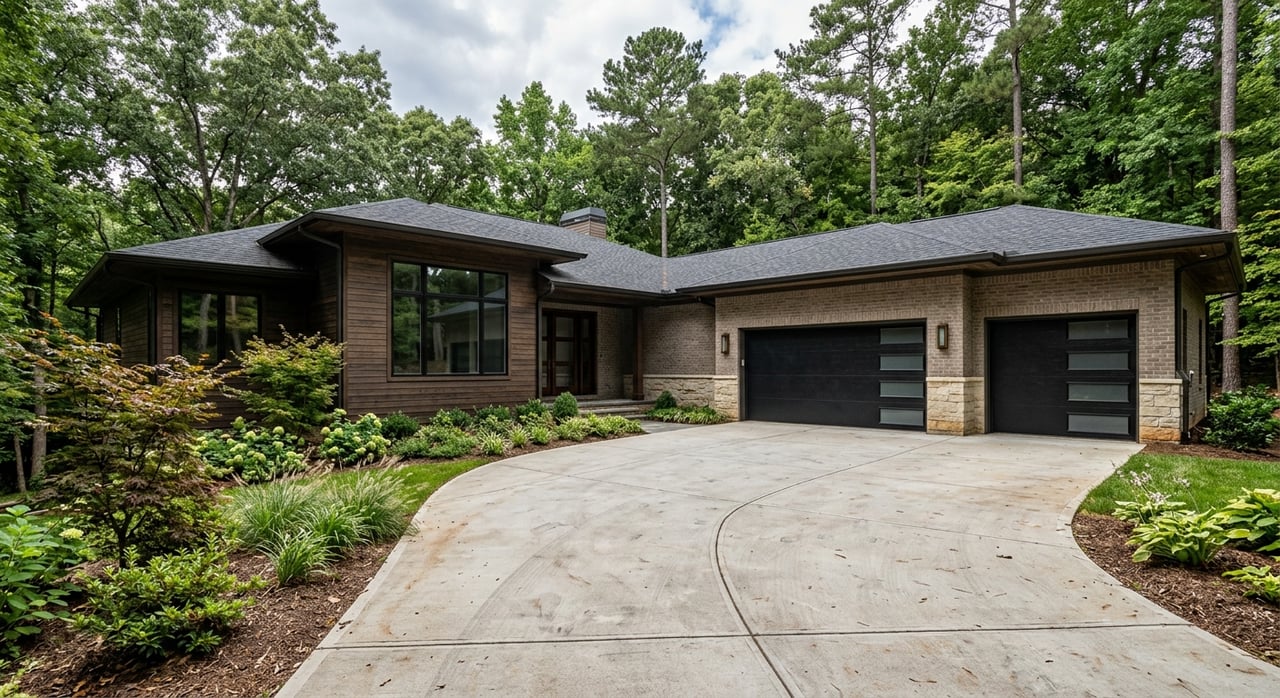
Metro Little Rock notes that Chenal’s housing stock skews newer and larger than almost anywhere else in the metro. Most homes were built after 1995, with a major wave of construction between 2005 and 2015, and many are traditional brick-and-stone homes on HOA-maintained streets.
If your current home feels tight, dated, or short on storage, that newer housing profile can be a major draw. You may find floor plans with larger living areas, more bedrooms, dedicated office space, and layouts that better fit how many households live today.
Home Sizes and Lot Options
One of the biggest mistakes buyers make is thinking Chenal Valley is all the same. It is not. The area includes everything from denser sections with lots around 0.2 acres to country club corridors with lots of 1 acre or more.
Research also shows a wide range of minimum home sizes in different sections. Some areas allow homes starting around 1,800 square feet for one-level plans, while others push well beyond that, with larger minimums tied to more estate-style settings.
That range is important for move-up buyers because your “next step” may not look like someone else’s. You may want a manageable lot with a newer home and less yard work, or you may want more land, more privacy, and a larger custom property.
Chenal Valley Price Range
Chenal Valley generally sits well above Little Rock’s citywide price point. Recent snapshots in the research place Chenal around the mid-$500,000s, with Homes.com reporting a median home sale price of $550,000 and a current median home price of $585,000.
At the same time, the neighborhood is not one-size-fits-all on price. Metro Little Rock describes entry points around $350,000 for attached townhomes and smaller single-family homes, while luxury custom homes can rise above $1.5 million.
Because these numbers come from different sources and timeframes, it is best to treat them as directional. Still, they tell a clear story: Chenal Valley is typically a move-up market, and buyers often come here expecting to pay more in exchange for more house, larger lots, and a deeper amenity package.
How Chenal Compares to Central Little Rock
For many buyers, the real question is not just “Is Chenal nice?” It is “Is Chenal a better fit for me than Hillcrest, Midtown, The Heights, or Downtown?”
That comparison matters because these areas offer very different lifestyles. Chenal Valley tends to trade centrality for space and planned amenities, while central Little Rock neighborhoods tend to trade lot size for older character, shorter drives, and stronger walkability.
Chenal vs Hillcrest and The Heights
Hillcrest and The Heights are known for older homes, smaller footprints, and established streetscapes. Research describes Hillcrest as a historic streetcar suburb with a mix of early 20th-century architecture, while UAMS characterizes Hillcrest and The Heights as older-home neighborhoods with access to shops, restaurants, and galleries.
If you love historic architecture and a more walkable daily routine, those neighborhoods may feel more natural. If you want a newer home, more square footage, and a more master-planned setting, Chenal Valley may check more boxes.
Chenal vs Midtown
Midtown offers a much more central location in Little Rock. Metro Little Rock describes it as the city’s most central neighborhood and says it is about 10 minutes from almost everything.
That centrality can be a major advantage if your routine revolves around many parts of the city. Chenal, by contrast, is in the far southwest corner of Little Rock, so the appeal is less about being in the middle of everything and more about having a west-side lifestyle with room to spread out.
Chenal vs Downtown
Downtown is a different housing ladder altogether. Research points to loft-style condos, newer condo towers, and a smaller supply of older single-family homes in the Quapaw Quarter.
If you want urban energy, condo living, or proximity to civic and cultural destinations, Downtown may be a better fit. If you want a larger detached home, neighborhood amenities, and a more suburban feel, Chenal Valley usually serves that goal more directly.
Commute and Daily Routine
Lifestyle fit is not just about the house. It is also about what your week actually looks like. Metro Little Rock rates Chenal Valley’s walkability at 28 out of 100 and estimates roughly 25 to 35 minutes to downtown and about 25 minutes to UAMS.
That does not make Chenal inconvenient for everyone. It simply means your routine is likely to be more car-oriented than it would be in Midtown, Hillcrest, or Downtown.
For some move-up buyers, that trade is easy to accept. If you prioritize newer homes, larger lots, golf access, and in-neighborhood retail, the drive may feel worth it. If you need fast access to downtown or spend most of your time in central Little Rock, it is a more meaningful consideration.
Who Chenal Valley Fits Best
Chenal Valley tends to be a strong fit if your next move is driven by space, layout, and amenities. It can make sense when your current home no longer supports your day-to-day life or when you want a setting that feels more residential and self-contained.
You may want to look more closely at Chenal if you are prioritizing:
- Newer housing stock
- Larger homes than you find in central neighborhoods
- Lot options ranging from compact to estate-style
- Golf and club-oriented amenities
- Walking and bike paths within the community
- West Little Rock retail and a more self-contained routine
When Chenal May Not Be the Right Fit
The best real estate decisions are not about chasing a popular neighborhood. They are about matching your purchase to your real priorities.
Chenal Valley may be less ideal if you care most about being close to the urban core, minimizing drive times, or buying into a neighborhood for historic architecture and walkability. In that case, Midtown, Hillcrest, The Heights, or Downtown may deserve a closer look.
You may also want to pause if stretching into Chenal means compromising too much on budget comfort. A move-up home should improve your quality of life, not create long-term stress around the monthly payment, upkeep, or total cost of ownership.
Questions to Ask Before You Buy
Before you decide whether Chenal Valley is your right next step, it helps to ask a few practical questions. These answers usually make the decision much clearer.
- Do you want more house, more land, or both?
- How important is newer construction to you?
- How often do you need to be downtown, at UAMS, or in central Little Rock?
- Would you use neighborhood amenities like golf, trails, or nearby retail?
- Are you comparing Chenal to central neighborhoods based on lifestyle, not just listing photos?
- Does the price range align with your long-term comfort level?
The Bottom Line on Chenal Valley
Chenal Valley can be an excellent move-up choice if you want more space, newer homes, larger lot options, and a west Little Rock lifestyle built around neighborhood amenities. It is especially compelling if your goal is to move into a home that feels like a clear upgrade in size, age, and setting.
At the same time, it is not automatically the best answer for every buyer. In Little Rock, the smartest comparison is usually not Chenal versus another subdivision. It is Chenal versus central-city convenience, historic housing character, and shorter daily drives.
If you want help weighing those tradeoffs in a practical way, Will Smith can help you compare Chenal Valley with Hillcrest, Midtown, Downtown, and other Little Rock neighborhoods so you can make your next move with confidence.
FAQs
Is Chenal Valley a good place for a move-up home in Little Rock?
- Yes, Chenal Valley is often a strong option for move-up buyers who want newer homes, larger square footage, bigger lot choices, and neighborhood amenities in west Little Rock.
How expensive are homes in Chenal Valley?
- Research places Chenal Valley around the mid-$500,000s overall, with some homes starting around $350,000 and higher-end custom homes rising above $1.5 million.
How does Chenal Valley compare to Hillcrest or Midtown?
- Chenal Valley generally offers newer and larger homes with more planned amenities, while Hillcrest and Midtown offer older housing stock, stronger walkability, and more central locations.
Is Chenal Valley walkable for daily errands?
- Chenal Valley is more car-oriented than central Little Rock, with Metro Little Rock rating its walkability at 28 out of 100.
How far is Chenal Valley from Downtown Little Rock?
- Metro Little Rock estimates that Chenal Valley is roughly 25 to 35 minutes from downtown, depending on traffic and your starting point within the neighborhood.
What kind of lots and homes can you find in Chenal Valley?
- Buyers can find a wide range of options, from smaller lots around 0.2 acres in denser sections to 1-acre-plus lots in country club corridors, along with newer brick-and-stone homes in many parts of the community.